Menu Close

Travel the Road to the Vote: A Women’s Suffrage Trip Through New York’s Finger Lakes

Some historic road trips follow battlefields or take you to stately presidential homes. This one follows a revolution that began in a small New York village and ultimately changed the Constitution of the United States.

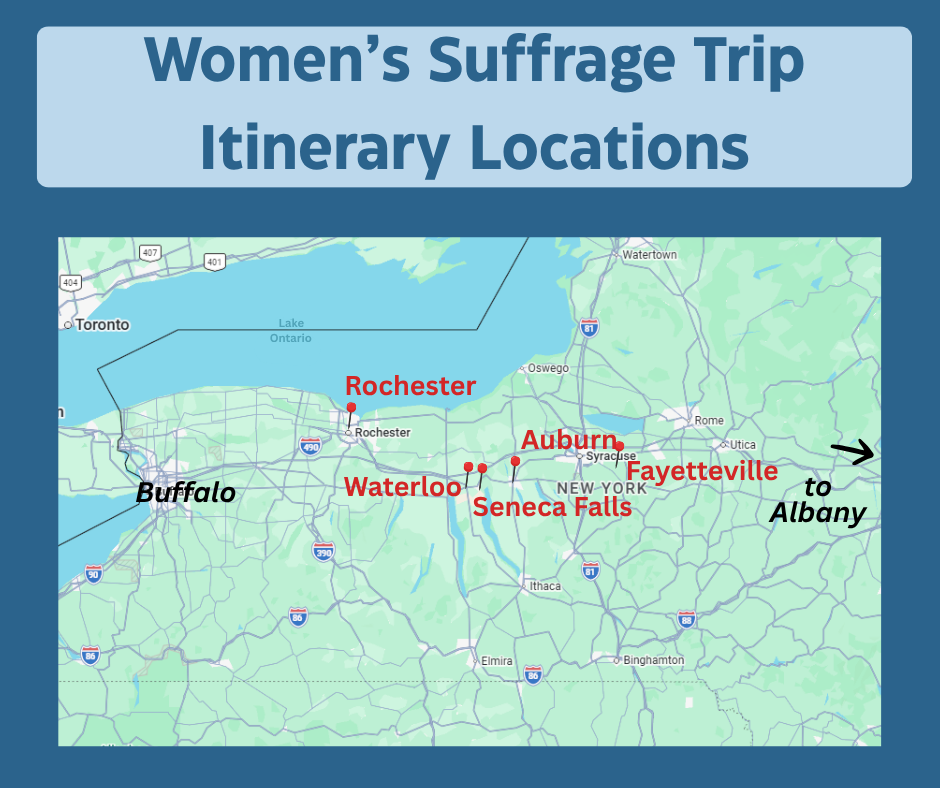
The Seneca Falls – Fayetteville – Rochester corridor has the most concentrated collection of significant suffrage sites anywhere in the country. Within a comfortable weekend drive, you can stand in the chapel where the movement began, walk through the homes of its most influential leaders, and follow the roads that connected the earliest champions of women’s rights.

Getting to New York's Finger Lakes Region

Flying into Rochester or Syracuse are the closest options for this trip but you can also use Buffalo further west or Albany further east. You’ll need a rental car for this trip to have full flexibility of scheduling and side adventures.

Several major airlines fly into the region, so check multiple carriers and locations to compare prices.

This trip is set up to complete as a loop to fly in/out of the same airport, but you could also fly in/out of a different airport and not have to double back. Rentals cars are often much more expensive for one-way rentals to be mindful of that if you choose that.

This order assumes flying through Rochester or Buffalo, if you end up flying through Syracuse or Albany you’ll want to adjust the order accordingly.

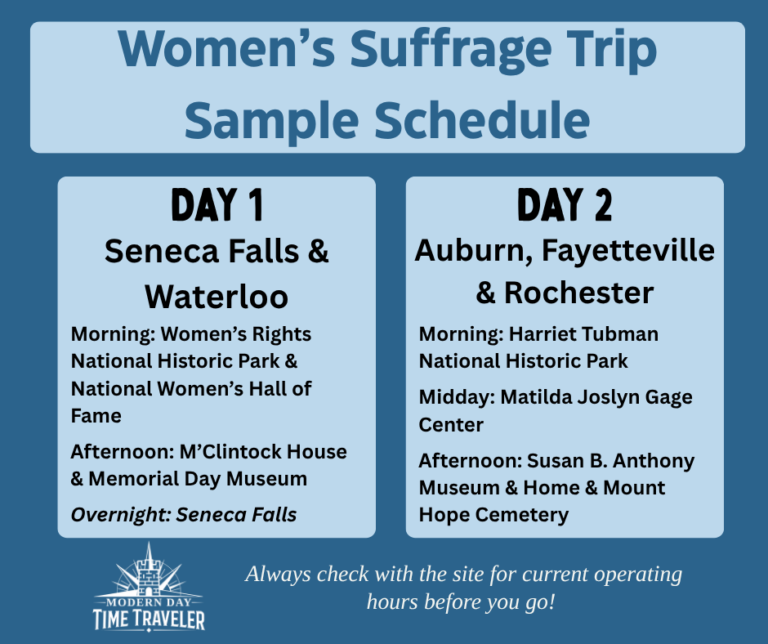
Women's Suffrage Trip Points of Interest:

Women's Suffrage Trip Day 1: Where the Revolution Began

First Stop: Women's Rights National Historical Park, Seneca Falls

Note: I put this stop first because of the overview to the suffrage movement that you’ll get at the Visitor’s Center. Doing it this way does mean some back-tracking later on, so if you’re short on time or just want to be more efficient with your driving, then you can follow the trip linearly from East-to-West or West-to-East.

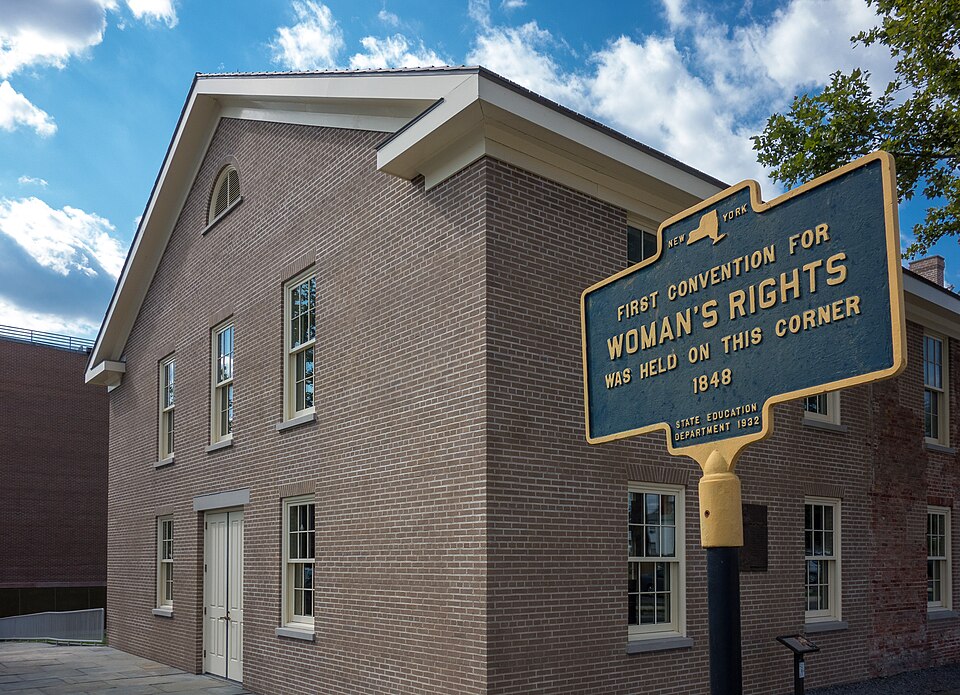
Wesleyan Methodist Church. Constructed 1843. Site of the first Women's Rights Convention. Seneca Falls, NY. NRHP.

About an hour’s drive whether you fly into Rochester or Syracuse brings you to the first stop on the trip. Add an hour if you fly into Buffalo and 2 hours if you fly into Albany. Arrive the night before and stay in Seneca Falls to get an early start and maximize your time.

In the summer of 1848, a group of citizens gathered in Seneca Falls, New York, to discuss a radical idea: that women deserved the same rights as men. Few could have imagined that their meeting would spark a movement lasting more than seventy years and eventually lead to the ratification of the 19th Amendment.

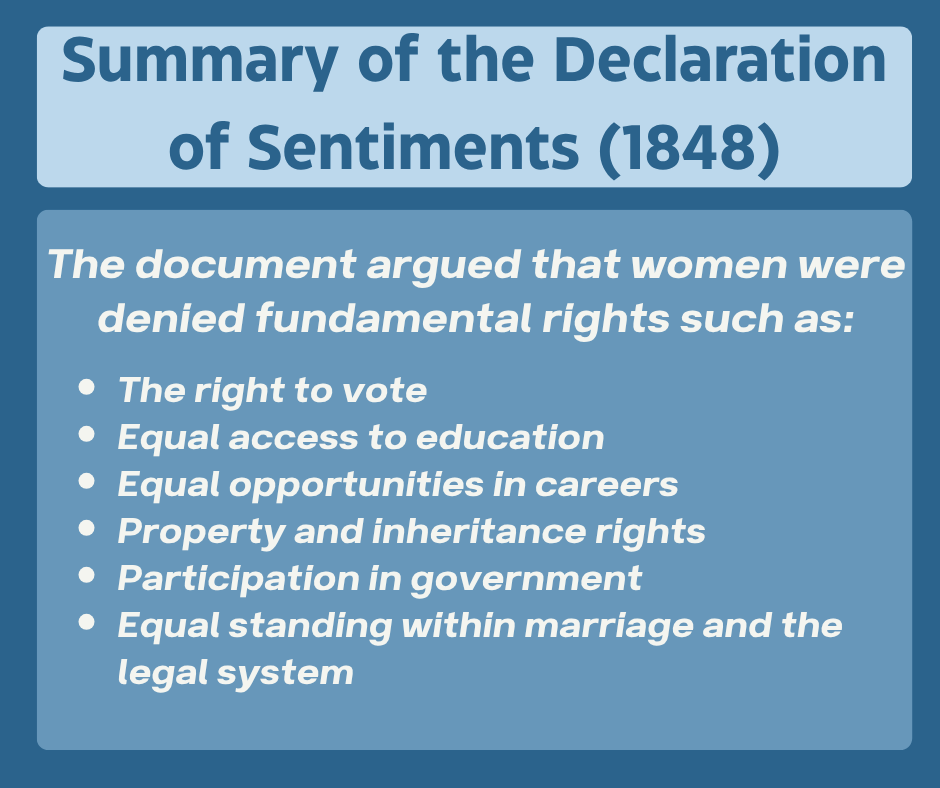
The convention produced the famous “Declaration of Sentiments”, intentionally modeled on the US Declaration of Independence and stating that “all men and women are created equal” and listing grievances against the legal and social (mis)treatment of women.

Historical Park Visitor Center: 136 Fall St., Seneca Falls, NY, 13148

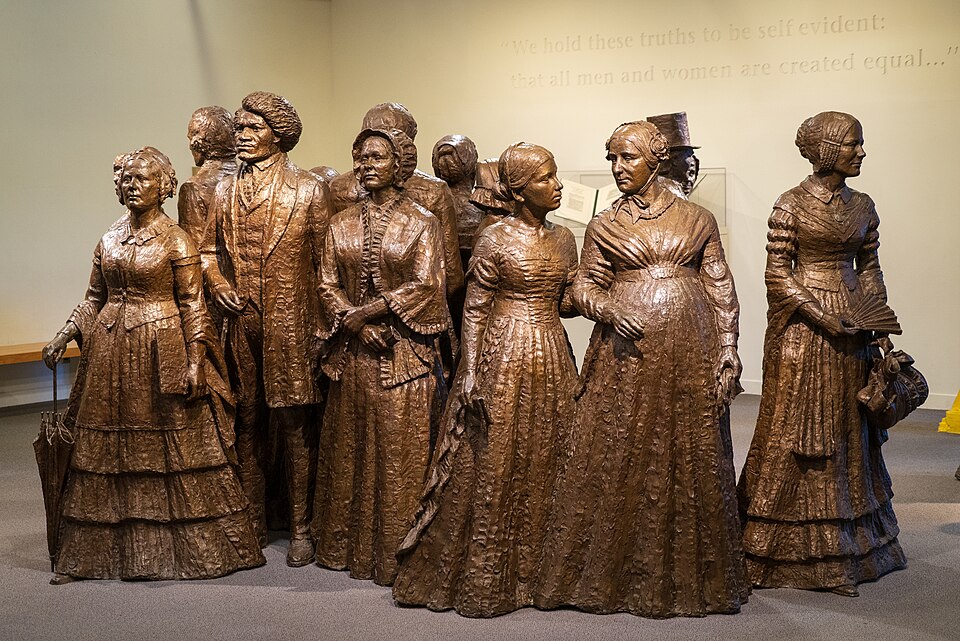
"First Wave" statue at the Visitor's Center of the National Park. Start here to get a good overview before you start on the trip.

Begin your visit at the visitor center, 136 Fall St, Seneca Falls, NY 13148 for an overview of what you’ll see on this trip before exploring the restored Wesleyan Chapel next door.

Standing inside the chapel is a surprisingly emotional experience. It is one thing to read about the women’s rights movement in a textbook. It is quite another to stand in the very room where ordinary citizens publicly demanded political equality for women for the first time. The rough brick walls and reconstructed interior provide a tangible connection to an extraordinary moment in American history.

The Declaration of Sentiments essentially asked: If Americans believed the principles of 1776, why should those principles not apply to women as well?

Today, many of its demands seem obvious. In 1848, however, the most controversial resolution was the call for women’s suffrage. Even some supporters of general women’s rights considered voting rights too extreme.
 
Yet convention organizers, including Elizabeth Cady Stanton, insisted on including it, and abolitionist Frederick Douglass spoke in favor of the measure. The resolution ultimately passed and became the movement’s central objective for the next seventy-two years.

I suggest to allow at least two hours to explore the exhibits and ranger presentations before heading out to the other sites in the area.

The Elizabeth Cady Stanton House, Seneca Falls

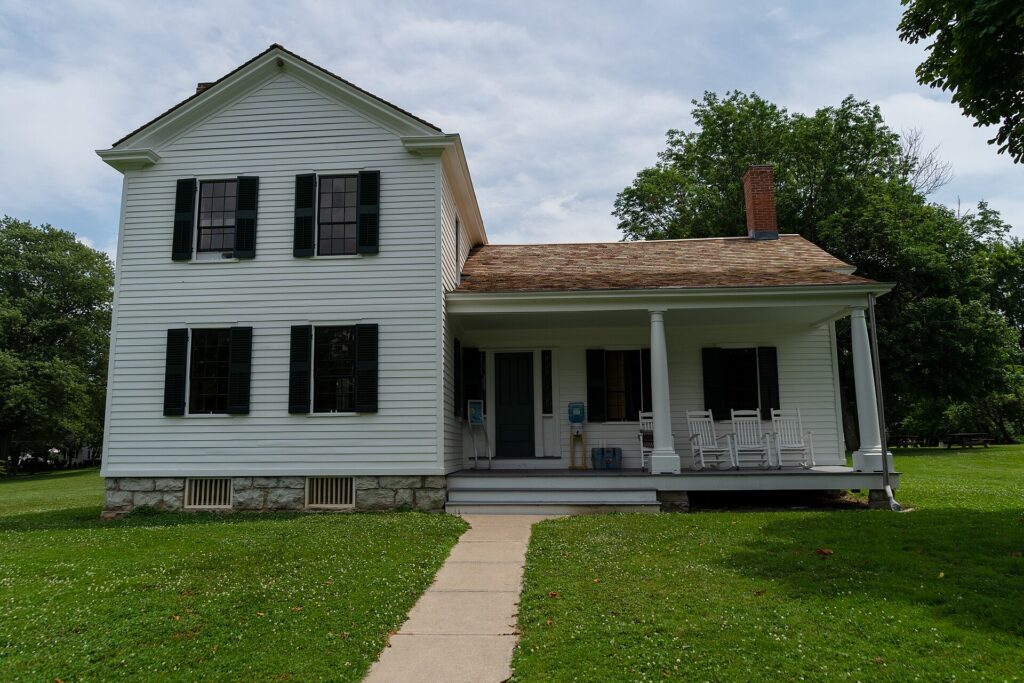
On the opposite side of the canal is the next stop, the home of Elizabeth Cady Stanton at 32 Washington St, Seneca Falls, NY, 13148.

The Elizabeth Cady Stanton House is owned by the National Park. It can be found at 32 Washington Street, Seneca Falls, NY

If Seneca Falls was the birthplace of the movement, Elizabeth Cady Stanton was one of its principal architects.

Stanton lived in this house from 1847 to 1862, raising seven children while simultaneously helping organize one of the most influential reform movements in American history. The home became a gathering place for reformers including abolitionists, publishers, and fellow suffrage leaders.

Unlike many historic homes that focus primarily on furnishings, the Stanton House tells a more personal story. Visitors learn how Stanton’s experiences as a wife and mother shaped her understanding of women’s legal and political inequality.

The result is a reminder that many great movements begin not in government buildings but around dining tables and kitchen conversations.

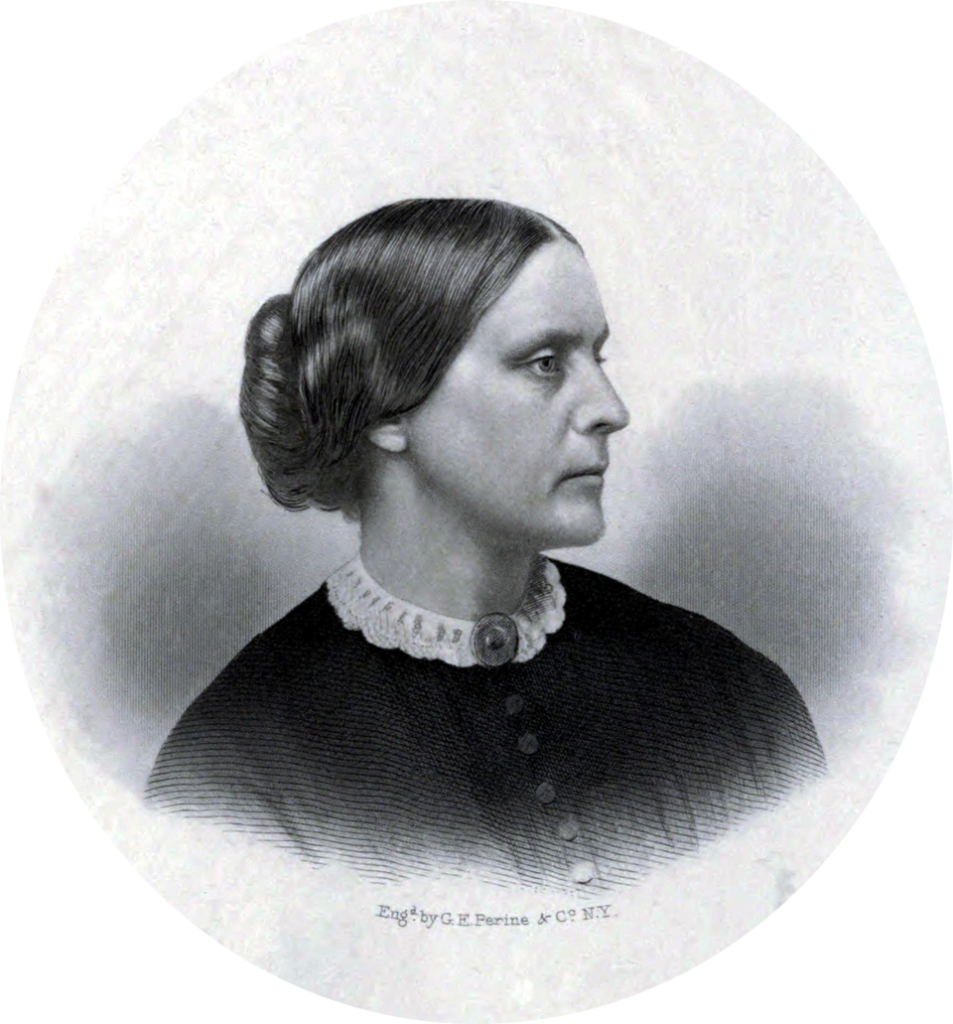
Susan B. Anthony, c. 1855
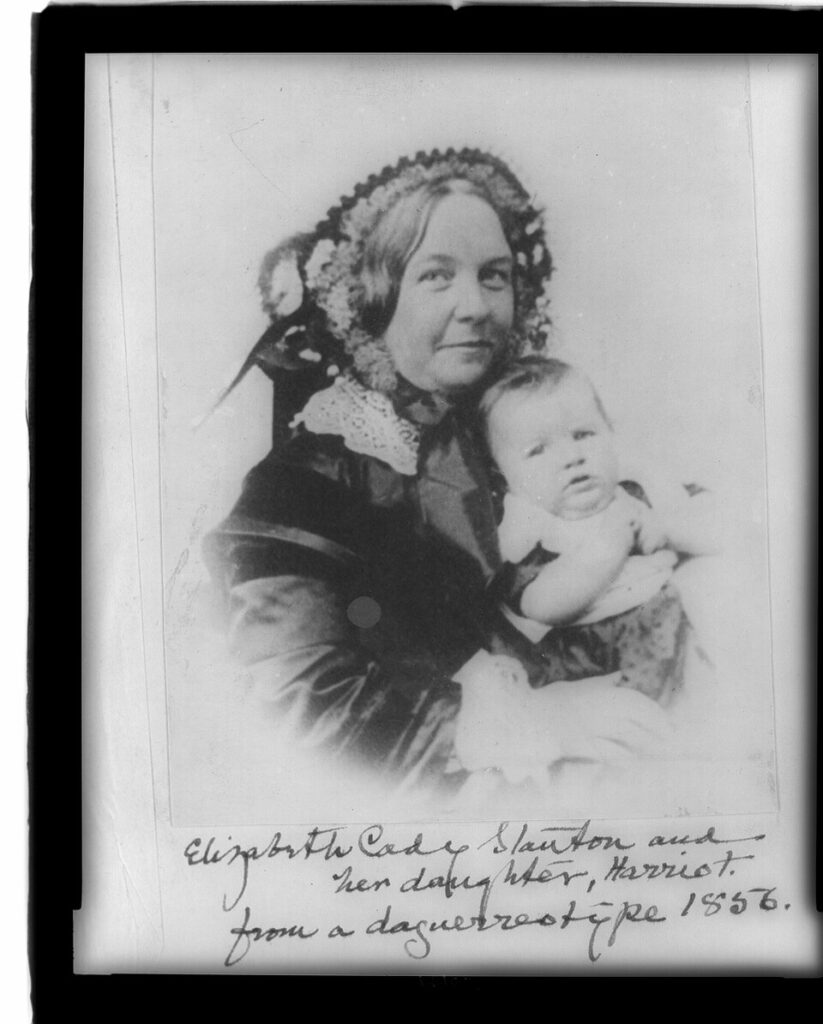
Elizabeth Cady Stanton, c. 1856

We often see photos of early pioneers of women’s suffrage as aged, white-haired women but photos and drawings from closer to the Seneca Falls convention better show how they would have looked at the time.

SIDE QUEST: National Women's Hall of Fame

Before you leave Seneca Falls, consider visiting this historic site. Founded in 1969, the Hall of Fame now includes more than 300 women and is housed in it’s own historic building, the 1844 Seneca Knitting Mill.

National Women’s Hall of Fame: 1 Canal St., Seneca Falls, NY

Women's Suffrage Trip Stop #2: The Planning Ground

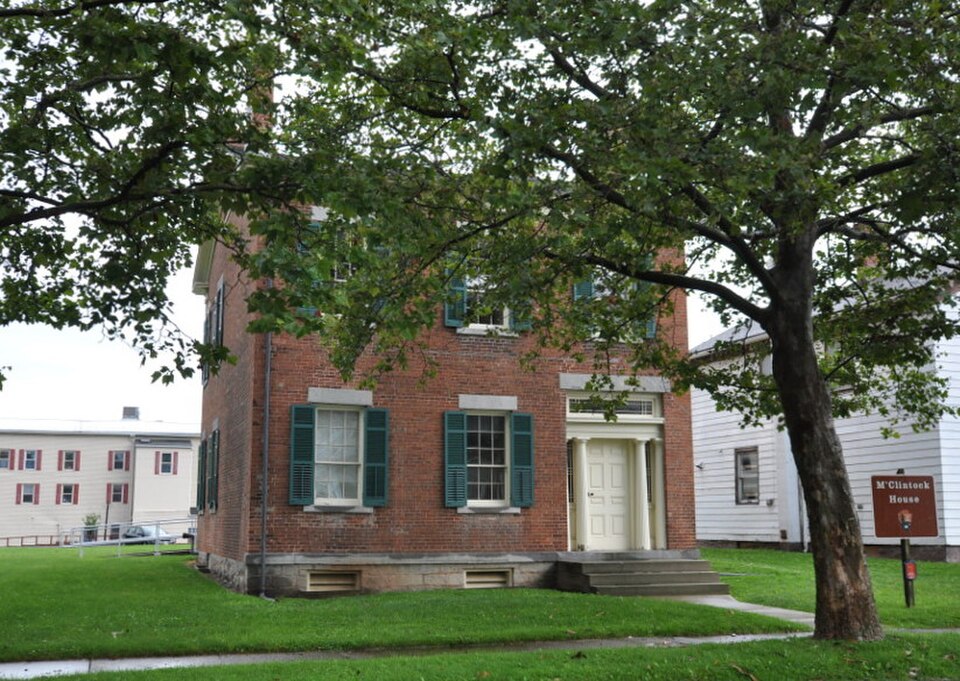
M'Clintock House: 14 E. Williams St. Waterloo, NY, 13165.

M'Clintock House, Waterloo, NY

From Seneca Falls it’s a quick 10 minute drive to the next stop. Head east to nearby Waterloo to the M’Clintock house at 14 E Williams St. Waterloo, NY, 13165. Note: the house may only be open for special events, so check the website to confirm.

Before the convention occurred, several key organizers met in Waterloo to discuss women’s status in society and plan the event that would change history. These meetings helped lay the foundation for the convention held days later in Seneca Falls.

The historic M’Clintock House remains one of the most significant locations connected to these preparations. Here, portions of the Declaration of Sentiments were drafted and refined before presentation to the public.

When visiting, you’re not seeing a grand mansion or government building. Instead, you’re looking at a modest family home where a handful of determined reformers sat around a table and produced a document that challenged centuries of legal and political inequality.

SIDE QUEST: Birthplace of Memorial Day

Waterloo also holds the distinction for being the birthplace of Memorial Day commemorations, which they started doing at the end of the Civil War.

National Memorial Day Museum: 31 E Williams St., Waterloo, NY 13165

Lodging

You’ll find many options in the area. Anything from boutique spots to chain hotels (get those points!) or cozy B&Bs. I usually have good luck with Tripadvisor for recommendations and then I book direct with the hotel.

SENECA FALLS lodging
AUBURN lodging
WATERLOO lodging

Women's Suffrage Trip Day 2: Following the Leaders

Women's Suffrage Trip Stop #3: Harriet Tubman National Historic Park at 47 Parker St., Auburn, NY 13021

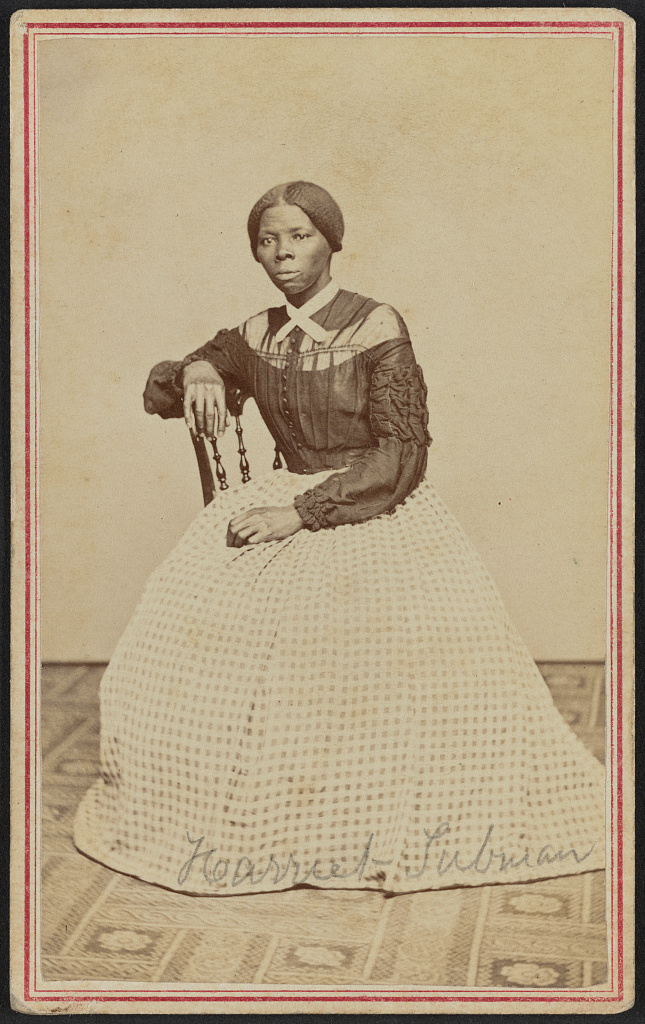
Photograph of Harriett Tubman c. 1860s-70s
Harriet Tubman was born on Maryland’s Eastern Shore around 1822. Enslaved from birth, she endured harsh working conditions and suffered a severe head injury as a teenager when an overseer struck her while attempting to stop another enslaved person from escaping.
 

She was successful in escaping in 1849 and worked to free hundreds of others. After the Civil War, Harriet Tubman settled in Auburn and spent the final decades of her life there. Why Auburn? The city was well known as a center of abolitionism and reform.

Stop by her home to learn about her work as an abolitionist, Underground Railroad conductor, and advocate for women’s suffrage.

Tubman attended women’s suffrage meetings and worked alongside leaders including Susan B. Anthony later in life. Her story provides a powerful connection between abolition and women’s rights.

Tubman died in Auburn and is buried in the town’s Fort Hill Cemetery. A nice walking tour map is available to tour the cemetery and see several notable burials.

SIDE QUEST: William H. Seward House Museum

Only a few minutes from the Tubman site is the home of William Seward, Secretary of State under Abraham Lincoln. His family were very involved with abolitionists and reformers throughout the region.

William H. Seward House Museum: 33 South St. Auburn, NY 13021

Women's Suffrage Trip Stop #4: The Matilda Joslyn Gage House: 210 E Genesee St. Fayetteville, NY 13066

40 Miles from Auburn is the home of Matilda Joslyn Gage. Check the website to confirm, but they are usually open from noon to 4pm, so you can spend the night near Auburn and still have plenty of time to drive to Fayetteville the next morning.

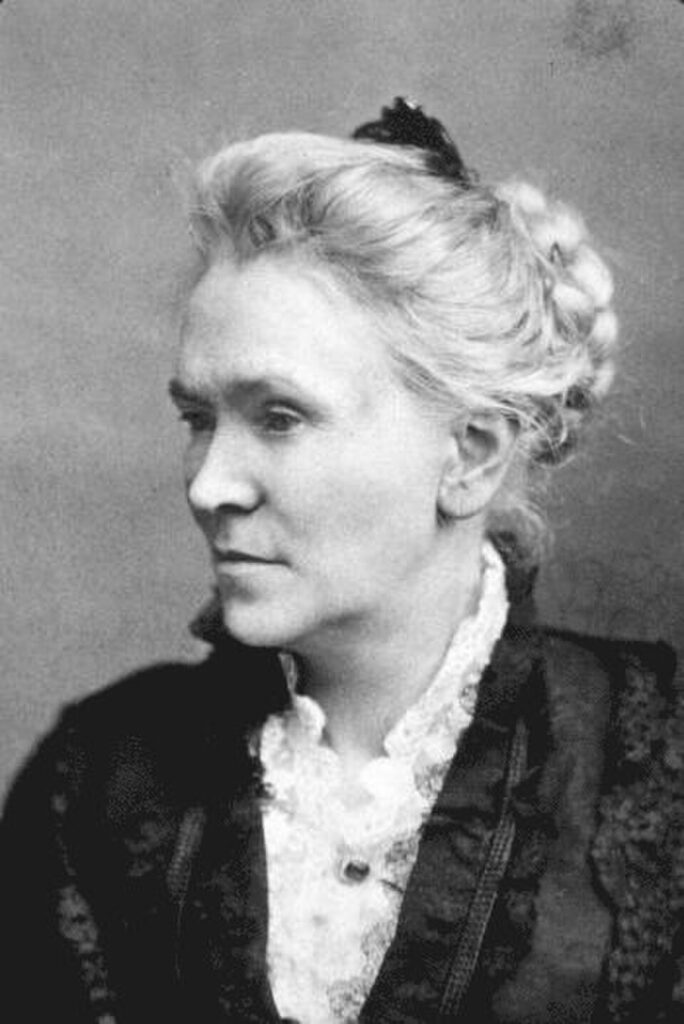
Many Americans can name Susan B. Anthony and Elizabeth Cady Stanton. Far fewer recognize Matilda Joslyn Gage.

During her lifetime, however, Gage was considered one of the movement’s most influential leaders. Historians often describe Anthony, Stanton, and Gage as the movement’s central triumvirate. 

The Fayetteville home where Gage lived for decades served as a center of suffrage activism and was also a stop on the Underground Railroad. 

Matilda Joslyn Gage, c. 1880's

Gage’s contributions extended beyond voting rights. She advocated for Native American rights and challenged social and religious systems she believed perpetuated inequality. Her willingness to embrace controversial positions sometimes resulted in her being overshadowed by other suffrage leaders after her death.

Today, her restored home helps tell the story of a woman whose influence on the movement was immense, even if her name is less familiar.

Drive to Rochester, approx. 90 minutes from Fayetteville

Time Travel Tip: to get an earlier start on Day 2, stay in Rochester and do your driving at night after the historic sites have closed.

Distance: Approximately 95 miles from Fayetteville

Driving Time: About 90 minutes

Women's Suffrage Trip Stop #5: National Susan B. Anthony Museum & House

If Elizabeth Cady Stanton was the movement’s intellectual force, Susan B. Anthony became its tireless organizer and public face.

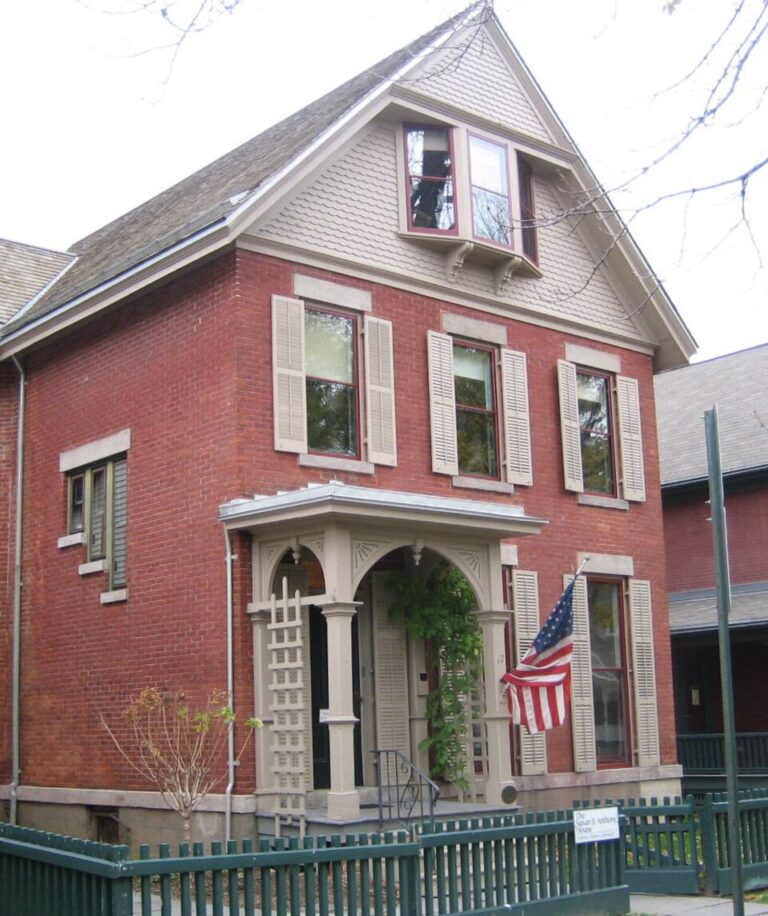
Susan B. Anthony house, Rochester, NY
Anthony’s Rochester home served as the headquarters of the National American Woman Suffrage Association during her presidency. It was also the site of one of the movement’s most famous acts of civil disobedience. In 1872, Anthony voted in a presidential election despite women being barred from voting. She was arrested and tried for the offense, transforming the event into a national statement on voting rights.
 
Walking through the house, visitors gain an appreciation for the scale of Anthony’s work. Long before email, social media, or even widespread telephone service, she organized a national movement through relentless travel, correspondence, speeches, and activism.
 

The home was also where she spent her final years and where she died in 1906.

Don't Miss: Susan B. Anthony Square

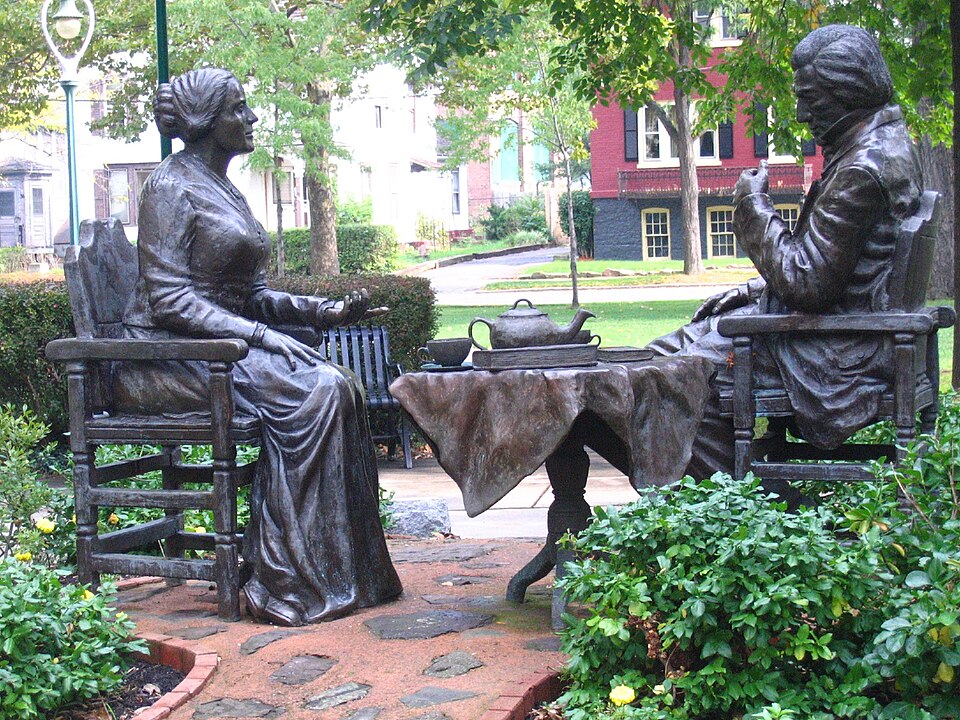
Just minutes away, a monument commemorates the location associated with the historic 1872 vote that led to Anthony’s arrest.
Join Susan B. Anthony and Frederick Douglass for tea in the Susan B. Anthony square near her home.

Final Stop (irony intended): Mount Hope Cemetery

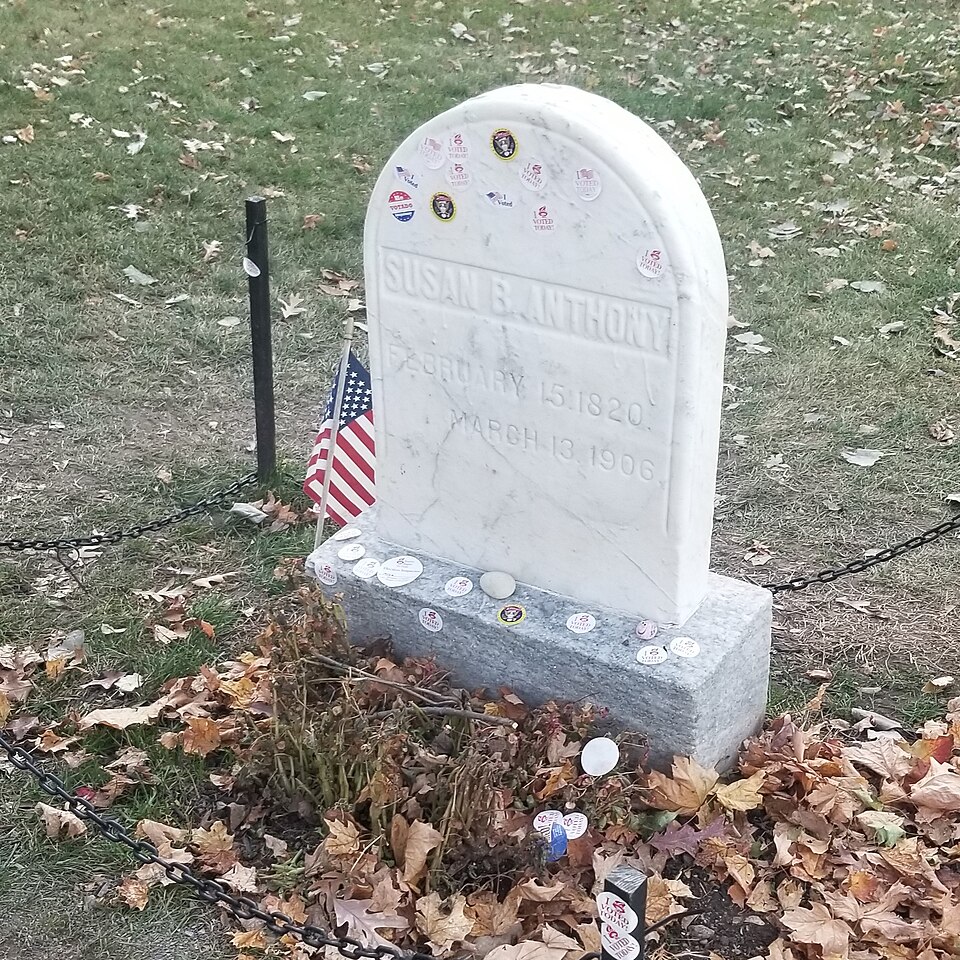
The gravestone of Susan B. Anthony at Mount Hope

Near the museum is the Mount Hope Cemetery at 1133 Mt. Hope Ave., Rochester, NY, 14620.

Both Susan B. Anthony and abolitionist Frederick Douglass are buried here, so it’s definitely worth a stop. 

Douglass settled in nearby Rochester after he escaped slavery in 1847. Recall that the Seneca Falls Convention declaring the rights of women took place in 1848, so Douglass was involved with women’s suffrage very early on. 

While at the cemetery, see if you can spot any “I Voted” stickers on the tombstone of Susan B. Anthony!

Women's Suffrage Trip Final Thoughts

Within roughly 150 miles, you can trace the path from the first organized demand for women’s equality to the homes of the leaders who spent decades transforming that demand into a national movement.

The journey reveals something often overlooked in American history: the fight for women’s suffrage did not begin in Washington, D.C. It began in small towns, private homes, church halls, and ordinary communities where determined people refused to accept the status quo.

Today, the roads connecting Seneca Falls, Waterloo, Rochester, and Fayetteville allow travelers to follow their footsteps and experience one of the most important civil rights stories in American history.

And unlike many historic journeys, this one can be completed in a single memorable weekend.

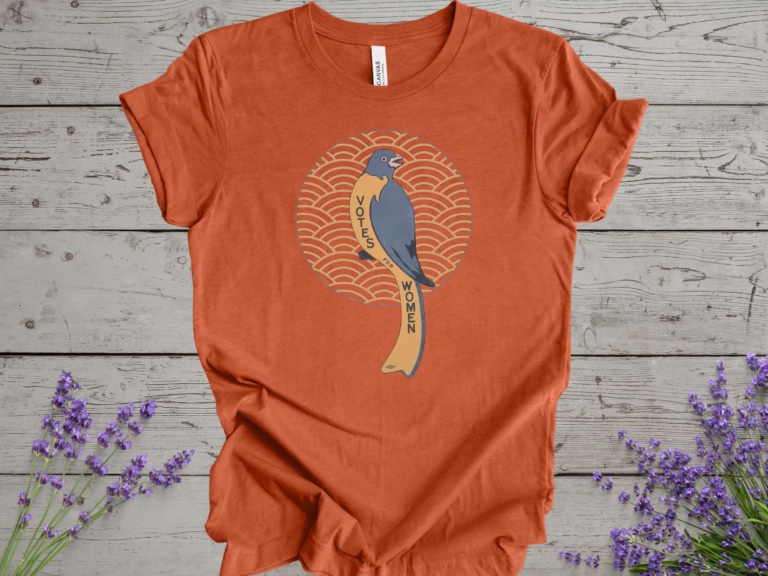
Original historic designs now available in my Etsy shop: EpochApparelDesigns
Suffrage Bluebird design, based on an image used by the women of Massachusetts in 1915