In the 1930’s, John Dillinger’s gang launched a crime spree throughout the Midwest and the FBI’s famous “G-men” were on the case.
The Chicago gang frequently spent time in the bucolic town of Lake Geneva, Wisconsin, 80 miles from Chicago, and agents were keeping an eye out for their most wanted. In November, 1934, they had one in their sights and the Battle of Barrington ensued.
Getting There
Location: Langendorf Park, Barrington, IL
Transport: Most convenient by car, but you could walk/Uber from the Barrington Metra commuter rail station (~1.5 miles).
John Dillinger's Gang
John Dillinger was a notorious Chicago gangster who styled himself as a Robin Hood as his gang robbed banks throughout the Midwest in 1933-34. The gang would also raid state police arsenals to stock up on weapons and ammunition.
The gang used military-style tactics in their raids, assigning roles like a designated look-out, a get-away driver and those focused on skills such as vault and safe cracking.
More than a dozen men would be associated with Dillinger’s gang, though none save the lead man himself have the notoriety of “Baby Face” Nelson.
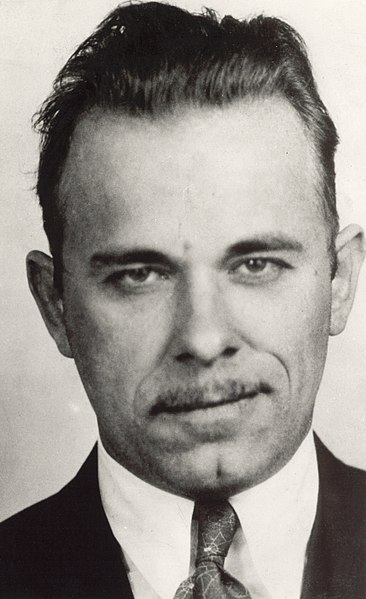
John Dillinger, FBI public domain photo
Who Was Baby Face Nelson?
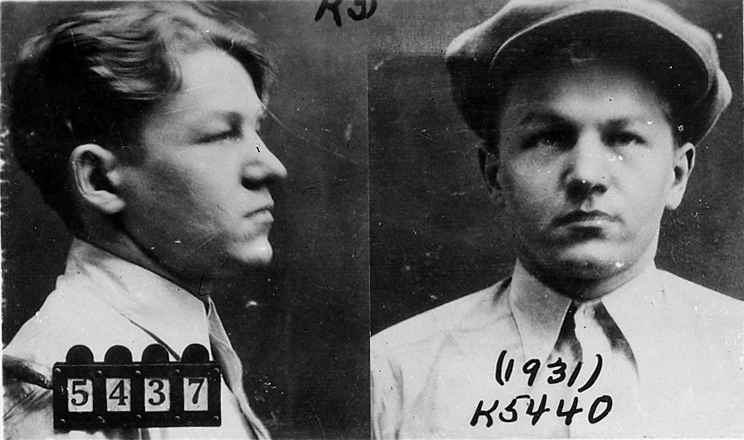
"Baby Face" Nelson, FBI public domain photo
Lester Gillis was born in Chicago in 1909 and spent much of his youth in local street gangs. He also went by the name George Nelson and his perpetually youthful appearance led to his nickname “Baby Face”. He met and married his wife, Helen, in 1928.
While serving time for a bank robbery, he escaped in 1932 while being transferred to stand trial for a different robbery. He made his way to California, where he met fellow bootlegger John Chase. The two men struck up a friendship, often introducing one another as half brothers.
Nelson’s wife joined the men in California but the trio eventually returned to Chicago, where they joined the Dillinger gang.
Gangster Hideouts and Escapes
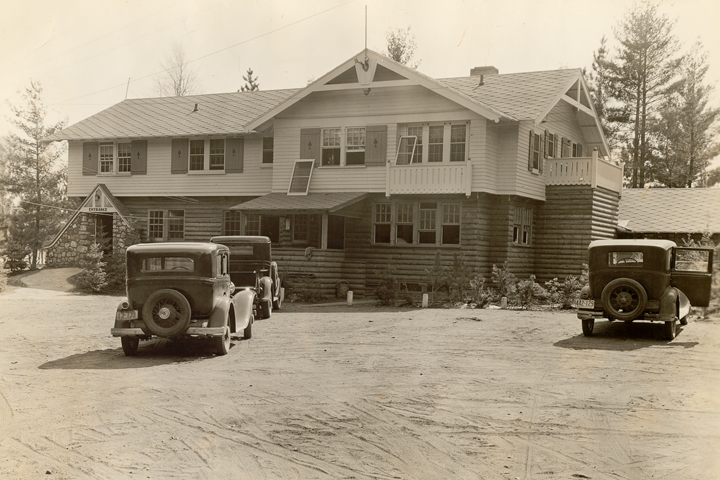
FBI photo: Little Bohemia Lodge, Wisconsin (public domain image)
Even gangsters need a vacation, and Wisconsin’s serene towns often served as an escape from the busy streets of Chicago in the 20’s and 30’s, even as it still does today.
The Little Bohemia Lodge in northern Wisconsin was a favorite spot of Dillinger. A botched FBI raid in 1934 failed to capture Dillinger, Nelson and others.
During the raid, Nelson escaped to a nearby home, leaving Helen behind. He was discovered and managed to kill two FBI agents and a local policeman to evade capture. A bounty was put out for information regarding Nelson’s whereabouts.
Soon after, Nelson and Dillinger robbed a bank in Indiana where a police officer was killed. They were later discovered in Chicago but again Nelson shot his way out and was not captured. Dillinger was later killed outside the Biograph theater in Chicago on July 22, 1934, but Nelson continued the gang.
The Battle of Barrington
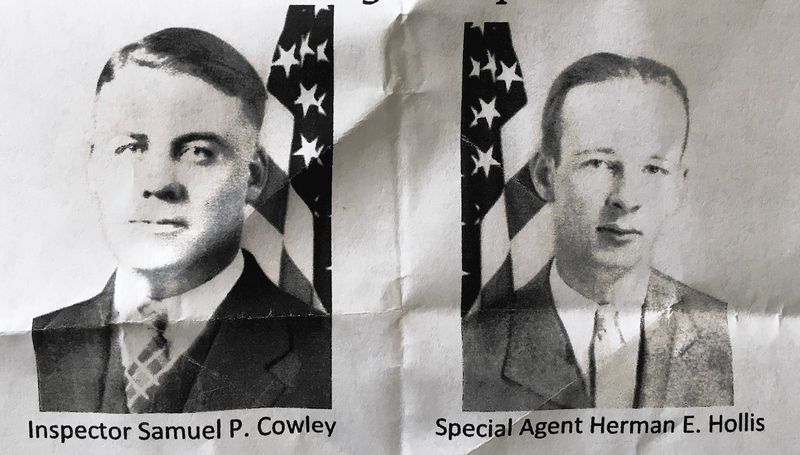
On November 27, 1934, a bystander spotted Nelson, his wife, and John Chase in a stolen car, headed towards Wisconsin from Chicago and reported it to the authorities. FBI Inspector Samuel P. Cowley set out to pursue the outlaws.
Soon after, another agent in pursuit, Special Agent Herman Hollis, joined forces with Cowley in the town of Barrington, Illinois.
Gunfire at Langendorf Park
Chase fired at the Agents, who returned fire and damaged the radiator of Nelson’s car.
Nelson veered his damaged car off Northwest Highway at the entrance to North Side Park in Barrington and began firing on the agents, who also stopped. Helen ran to a nearby field to take cover during the gunfight.
FBI Inspector Cowley and Special Agent Hollis were killed in the line of duty November 1934 pursuing wanted gangster Baby Face Nelson, who also died as a result of the gunfight. Photo: Chicago Tribune, May 19, 2017
The exchange killed Hollis at the scene and Cowley suffered fatal wounds. Nelson was also wounded, but managed to steal Cowley’s car since his own was too damaged to continue. With Chase behind the wheel, they fled the scene with Helen, but Nelson was not to recover. Someone dumped Nelson’s body alongside the road, and authorities found it the next day following an anonymous tip.
Helen Gillis was captured the following day and sent to a Federal Women’s Reformatory. Chase managed to evade capture for another month but was eventually captured as well. He was the first person tried under a new law that classified the murder of an FBI agent killed while performing their duty a federal offence. As a result, officials sent Chase to Alcatraz.
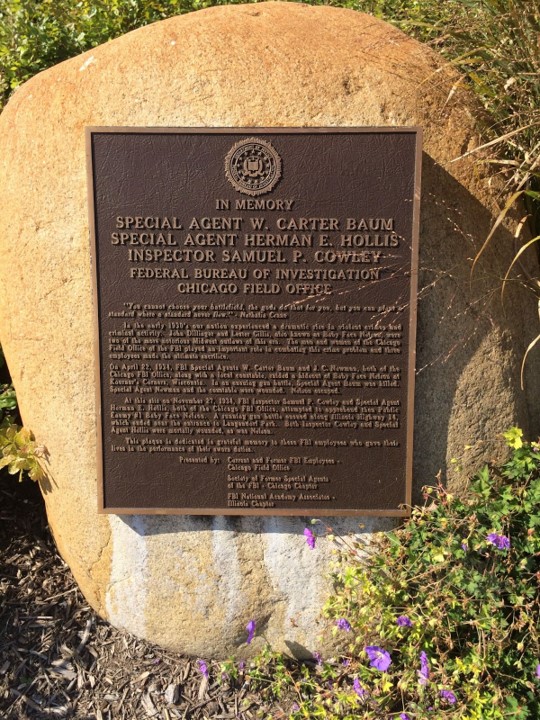
Today, people know the Battle of Barrington site as Langendorf Park and a modest plaque commemorates the law enforcement officials who lost their lives that day.
Commemorative plaque at the Battle of Barrington site
Visiting the Battle Site Today
Barrington incorporated in 1865 and by the early 1900’s became a regular area for relaxation for the wealthy businessmen of Chicago, 40 miles to the southeast.
There is ample parking available at the site, with multiple shops and restaurants to visit nearby.
Original historic designs now available in my Etsy shop: EpochApparelDesigns
The Volstead Act of 1919 ushered in Prohibition and led to the rise of gangsters like Capone, Dillinger, and Nelson. This original shirt design highlights the G-men like Inspector Cowley and Agent Hollis who worked to stop them.