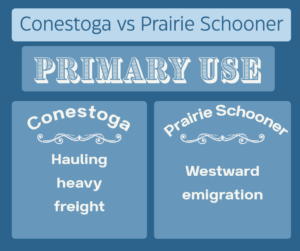
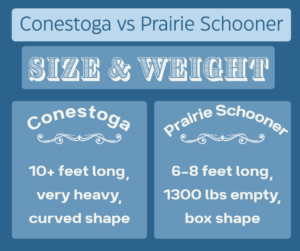
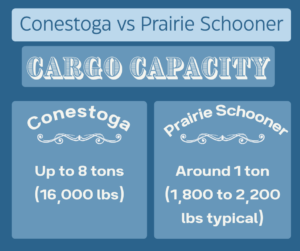
The Conestoga wagon was the industrial freight truck of early America. This massive, beautifully engineered vehicle was built for hauling heavy loads across rough eastern roads. Originating in Pennsylvania in the early 18th century, it was designed to carry up to 8 short tons (16,000 pounds!) of goods. Its distinctive curved floor, high sideboards, and oversized wheels made it ideal for transporting produce, iron, furs, and manufactured goods between farms, towns, and ports.
But not all covered wagons are the same. The Conestoga was the 16-wheeler of it’s time while other versions were more like an SUV. Covered wagons have been used since prehistoric times, so they aren’t just a remnant of the American Old West!
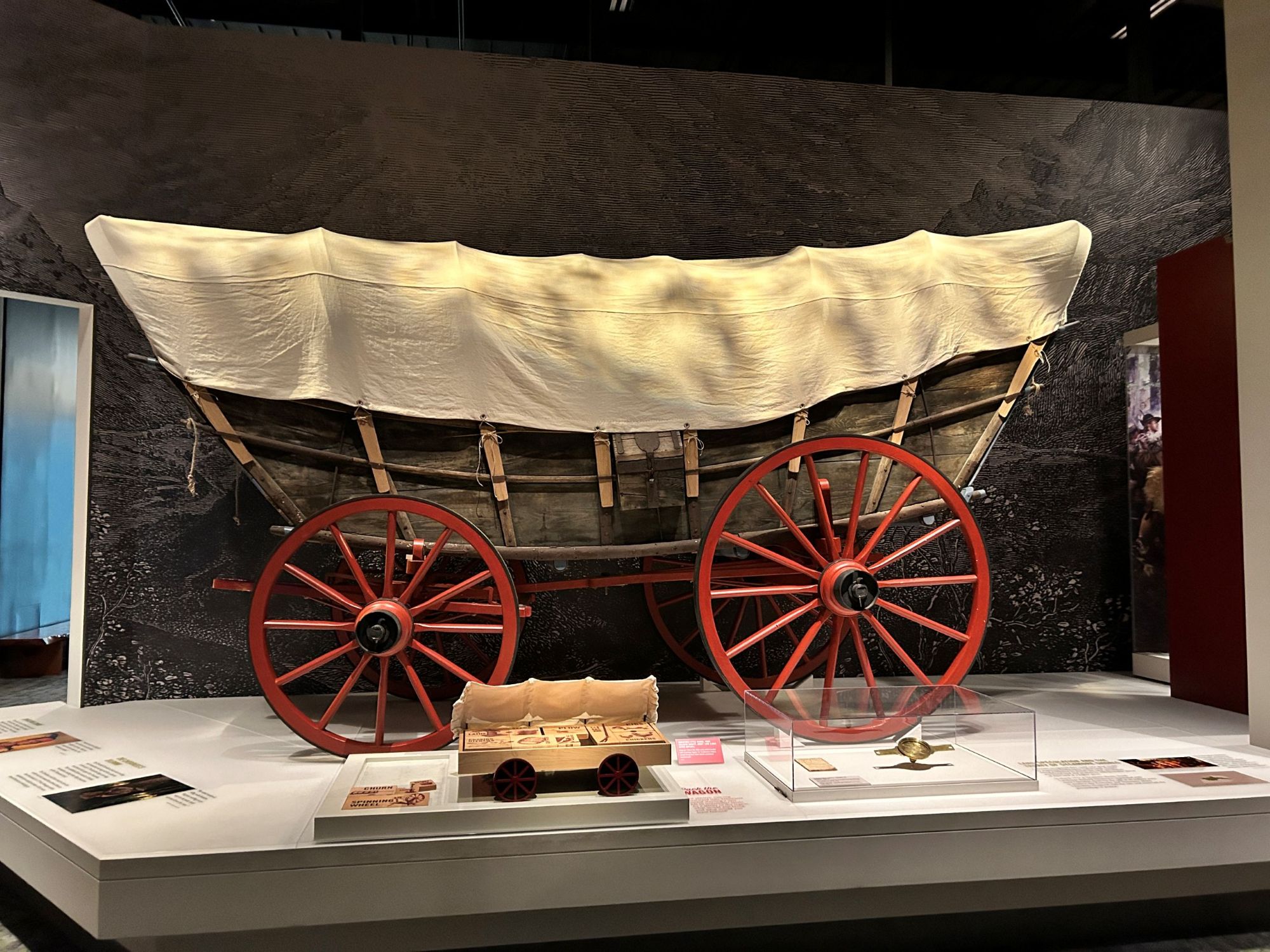
Where to find covered wagons
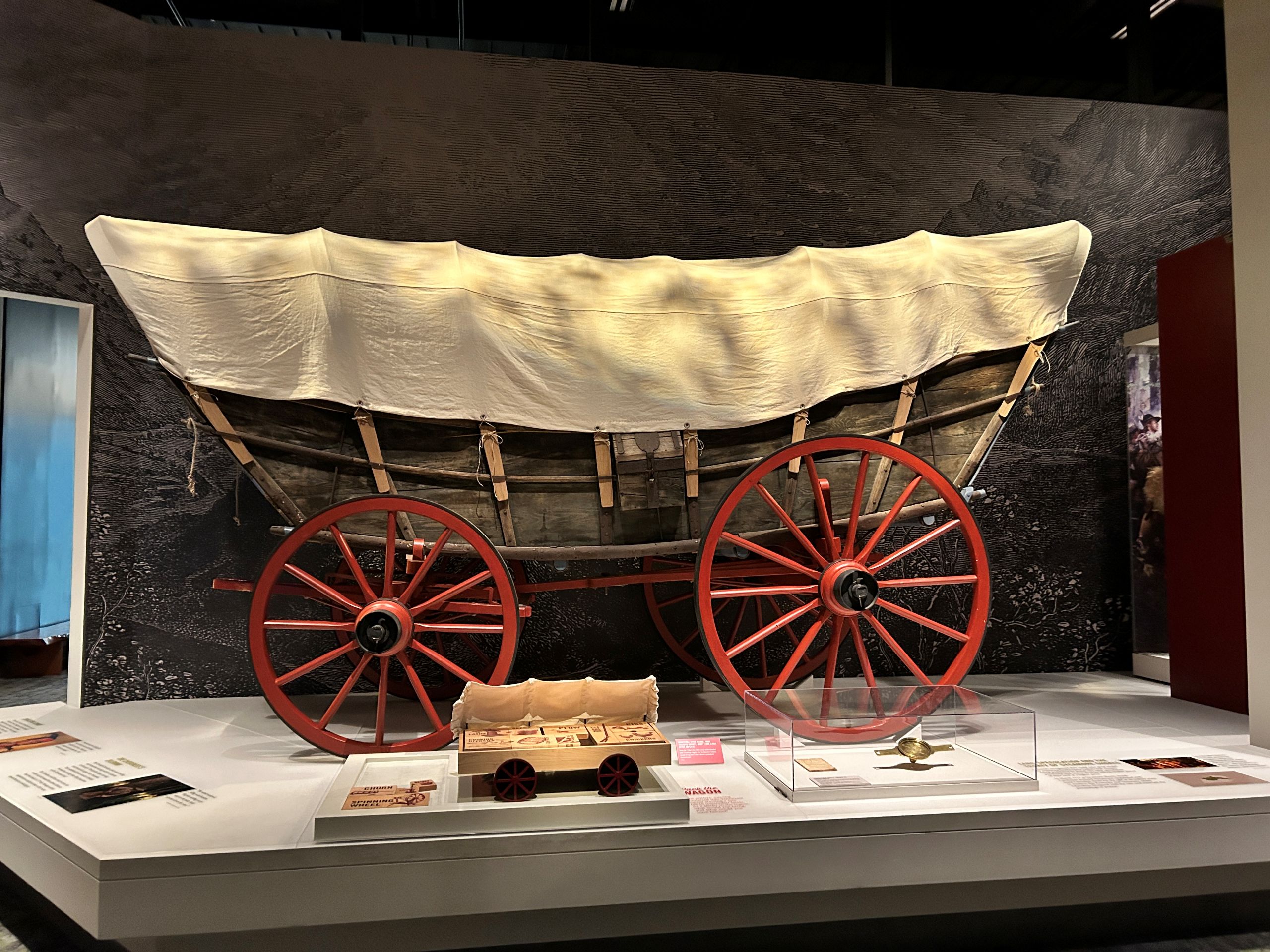
Tennessee State Museum, Nashville. Author photo, 2026.
Conestoga Wagon History: The Original Heavy-Duty Hauler
Ask someone to picture a covered wagon and I bet they’ll imagine a picturesque family sitting in a square box gently swaying along on their way across the country. But that’s not a Conestoga. The Conestoga was a beast. Large wheels, canvas roof stretched over wooden bows, curved wooden “boat shape”, pulled by a team of oxen or horses, making its own way. That’s a Conestoga.
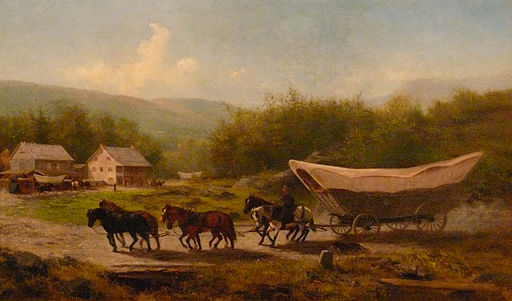
Painting of a Conestoga Wagon, 1883 (CC public domain image)
The Conestoga was built for freight, not family travel, and they were specifically designed with features crafted for this purpose.
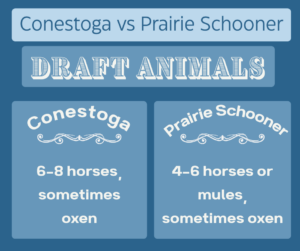
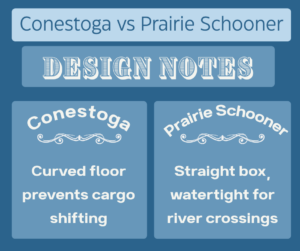
The curved body kept cargo centered and avoided spillage. The large real wheels – some reached five feet in diameter! – provided stability over uneven terrain. The large payload meant several animals would be needed to pull it. Often 4-6 horses were used, but sometimes oxen were employed.
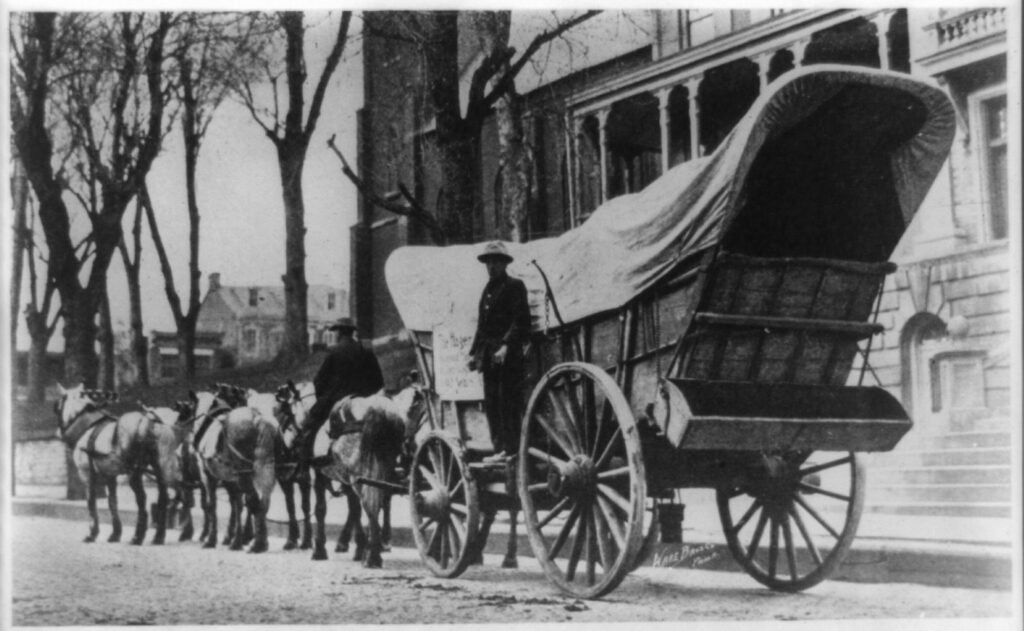
Built by German craftsmen in the lush Conestoga River Valley of Pennsylvania in the early 1700’s, they connected colonies in a world before highways. Usually the driver would ride on one of the horses or walk alongside the team. Conestogas were not built for comfort! Anyone daring enough to sit with the cargo would have found themselves tossed around like a sack of potatoes. Likely while sitting next to a sack of potatoes. Or flour. Or barrels of whiskey. Or rods of iron.
Historic Conestoga Wagon, 1862. Library of Congress image.
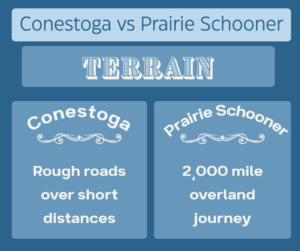
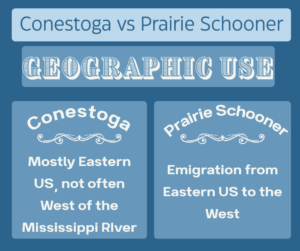
Conestoga vs Prarie Schooner: A Clear Comparison
The smaller wagon you may have pictured earlier, or saw when playing the classic computer game ” The Oregon Trail”, was usually a prairie schooner style.
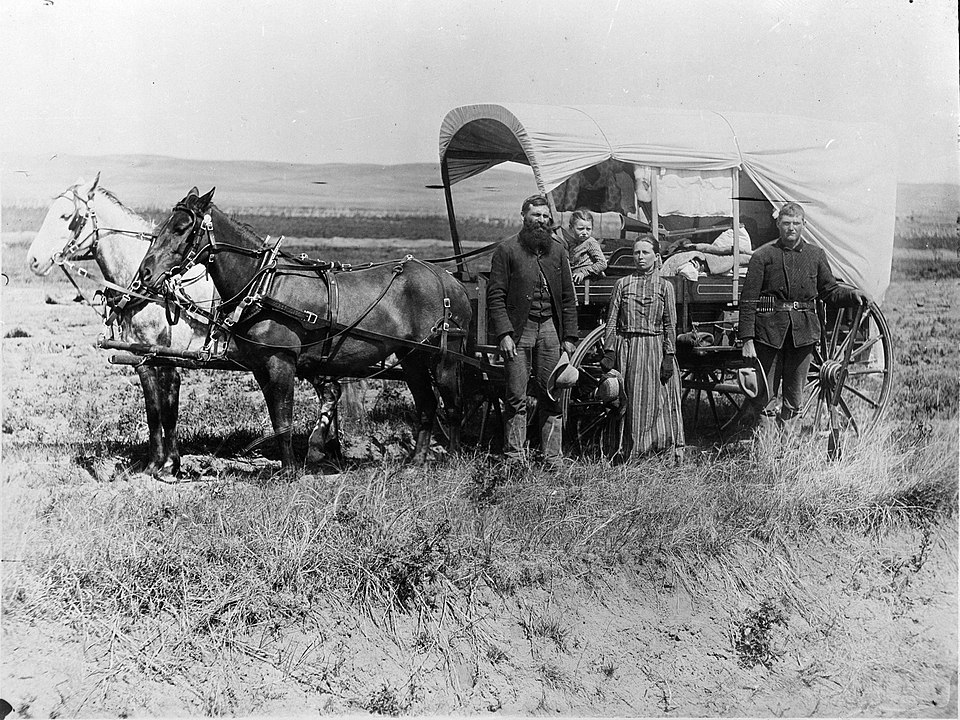
The prairie schooner was more like the SUV of its time, a more multi-purpose vehicle that could transport people and goods. This kind of wagon came about about a century after the Conestoga. It was at this time emigrants traveling to the American West in the early 1800’s needed a means of transport for their entire household.
Family and their prairie schooner-style covered wagon, Nebraska, 1886. National Archives image.
As Americans pushed westward, they needed a different kind of vehicle. The bulky, heavy, Conestoga wasn’t practical for long distances or varied terrain like winding mountain passes and fording rivers. Imagine trying to drive a 16-wheeler off-roading!
As a result, families traveling routes like the Great Wagon Road, the Mormon trail, the Santa Fe Trail, or the Oregon Trail, opted for a lighter, more maneuverable prairie schooner style.
Bonus: Covered Wagon from 1500 BC
Conestoga wagons weren’t the first of their kind by any means. Ancient people used covered wagons to move as well. A well-preserved ancient example was found in a Bronze Age burial chamber in Armenia.
The chamber was found in the 1950’s and held more than 500 burials from over 3,000 years ago. Six wagons were excavated, and one is on display in the History Museum of Armenia.
Original historic designs now available in my Etsy shop: EpochApparelDesigns
A Conestoga wagon is highlighted on this Historical Eras t-shirt. More colors available in my Etsy shop