The term half-timbered refers to a construction technique, not a style, and it’s been around for centuries. The method uses a visible wooden framework with beams arranged vertically, horizontally, and diagonally. The space between beams is filled with materials like wattle and daub, brick, or stone. The result? A striking grid of dark wood contrasted with pale infill that you can find all over Europe.
This technique dates back to the Middle Ages, with many surviving examples from the 14th to 18th centuries. It was a practical solution: wood was abundant, and the modular design allowed for flexibility and repair. Over time, regional variations emerged—some with steeply pitched roofs to shed rain, others with elaborate carvings or painted motifs.
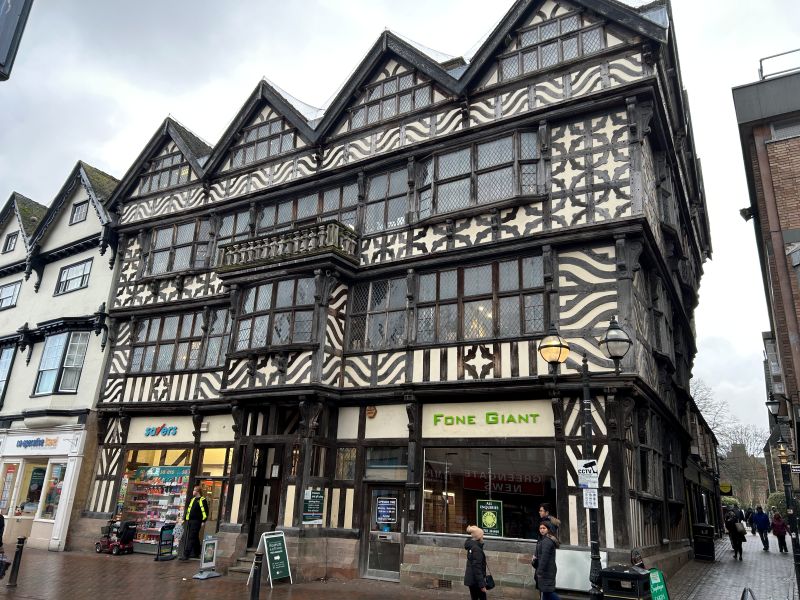
The Ancient High House in Stafford, England is a beautiful example of how artistic the half-timbered technique could be.
What is Wattle and Daub Construction?
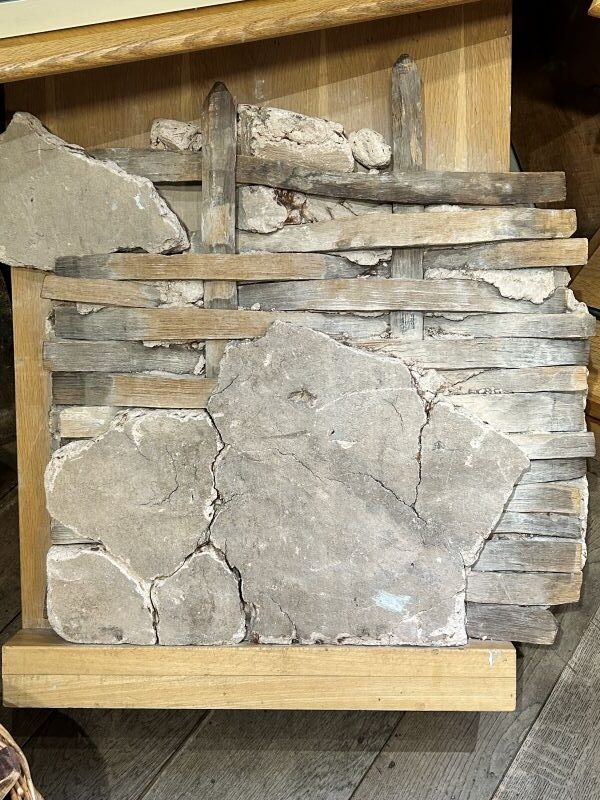
Wattle and daub is a composite wall-building method that combines a woven lattice of wooden strips (wattle) with a sticky, insulating mixture (daub) applied over it. Once dried, the daub hardens into a durable, weather-resistant surface. Many half-timbered houses used this as the filler between beams.
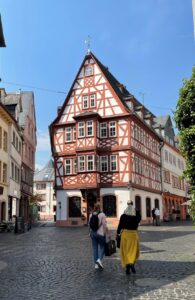
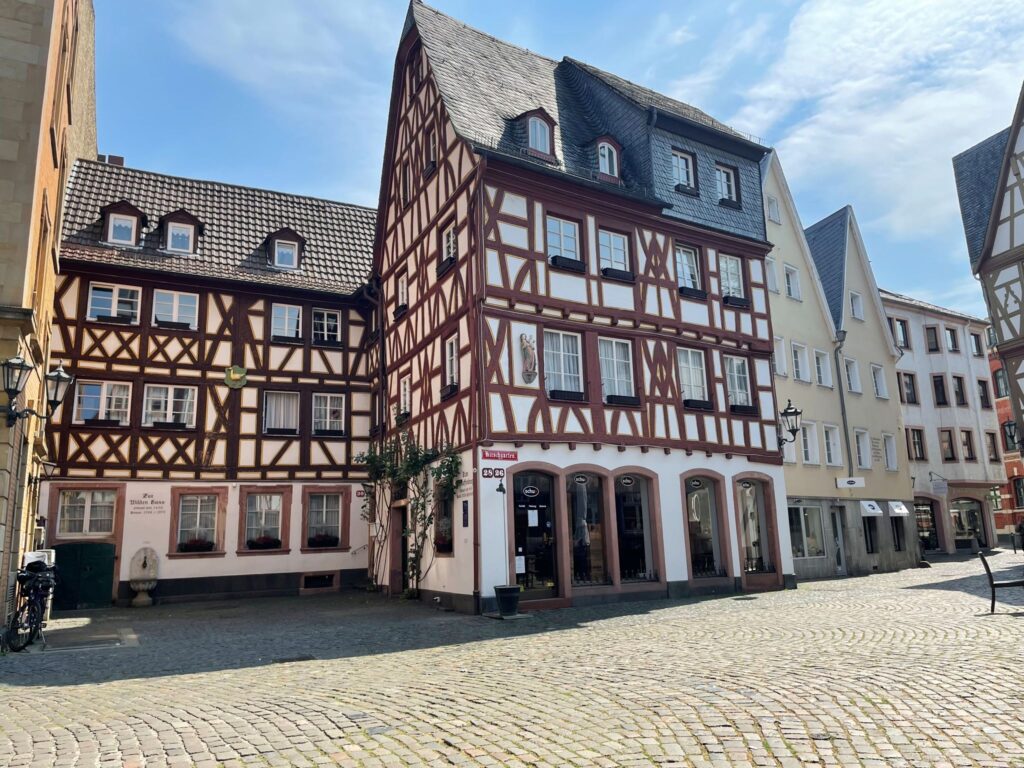
A medieval half-timbered house in Mainz, Germany
The Components:
Wattle: Thin, flexible branches (often hazel, willow, or ash) woven between upright wooden stakes to form a mesh or lattice.
Daub: A blend of natural materials—typically clay, soil, straw, animal dung, and sometimes lime—smeared over the wattle to seal and insulate.
In many countries, daub was sometimes whitewashed with lime, creating a stark contrast to the dark beams. In England the look became synonymous with the “Tudor style”. In Germany, it was known as “Fachwerk”.
16th century wattle and daub preserved at the Ancient High House, Stafford, England
Why Use Wattle and Daub Construction?
Wattle and daub is lightweight and flexible, ideal for timber-framed buildings, especially in damp areas. It can also be locally sourced, and builders used whatever natural resources were available, making it cost-effective.
Daub is also a decent insulator, so it helped keep inside temperatures cooler in the summer and warm in the winter. It is also easily repairable, so damaged sections could be patched without needing to tear down the whole wall.
Building a Half-Timbered House
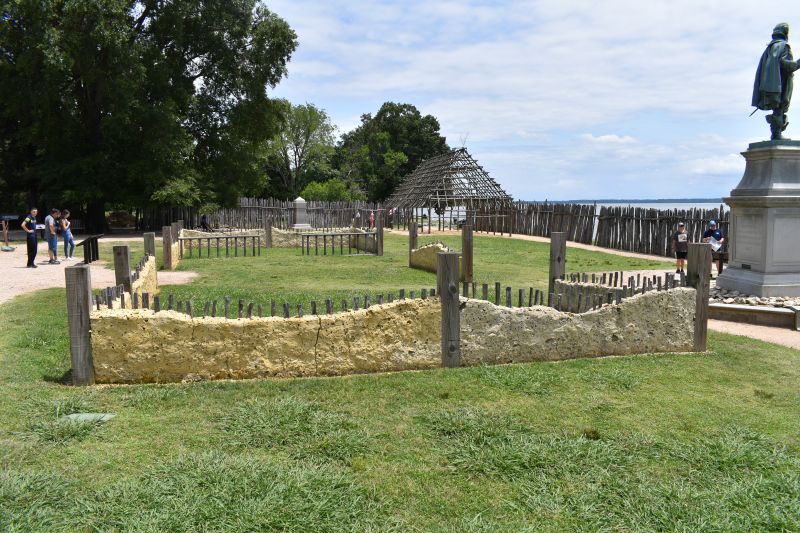
Jamestown Virginia recreation of a wattle and daub construction
The technique dates back as as early as 6000 BC in some Neolithic settlements, and the practice was taken around the world.
Jamestown, Virginia, the first permanent colony of the English in America, used wattle and daub construction for many buildings when it was founded in the early 17th century.
A recreation on site today shows how wattle, the inner reeds, in the walls act as a substrate to apply the daub.
Archaeologists often find fingerprints, tool marks, or impressions of straw remaining on wattle and daub construction, due to the impressionable softness of the daub when it is first applied.
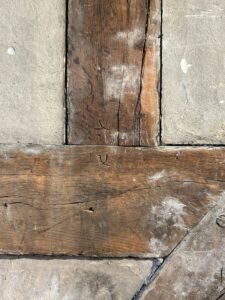
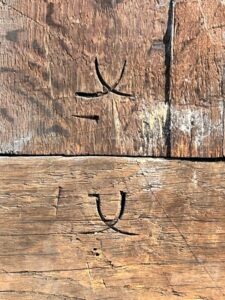
You can also look for carpenter’s marks on the wooden beams. These marks helped the builders know what pieces should be joined together on site. Both Roman and Arabic numerals were used to mark beams so that the puzzle pieces would go together correctly at the build site.
Look closely - can you spot the double arced lines on these two pieces of wood? That told the builders these beams should be placed together. Ancient High House, Stafford, England
Close-up view of the carpenter's marks on beams at the Ancient High House, Stafford, England.
Where to find Half-Timbered Houses
Half-timbered wattle and daub construction houses in Mainz, Germany
Walk through the old town of any city in Europe and chances are you’ll find a half-timbered house!
In Germany you can check out Mainz, Rothernburg ob der Tauber or Quedlinburg for example. Quedlinburg is on my to-do list for sure, as it boasts more than 1300 half-timbered medieval houses still standing!
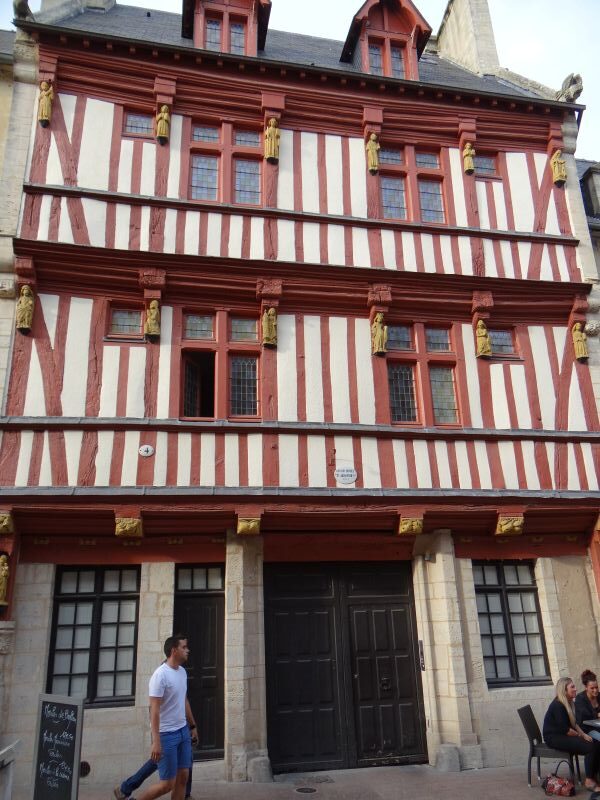
France and England are also great places to find these architectural treasures. Often, taxes were levied not on the overall size of the home but the footprint, so many times you’ll see half-timbered houses with upper stories that protrude above the ground floor in a very precarious manner!
Half-timbered house in Rouen, France
Half-timbered houses are more than quaint, they’re living records of vernacular architecture, shaped by local materials, climate, and culture. They housed merchants, artisans, and nobility alike. Many towns preserved them through centuries of war, industrialization, and modernization, making them rare windows into medieval urban life.
Many today house museum, coffee shops, or other businesses so duck in and see these wonderful structures inside and out!
Original historic designs now available in my Etsy shop: EpochApparelDesigns
Drywall is the easy way! Go medieval with wattle and daub for your next building project.