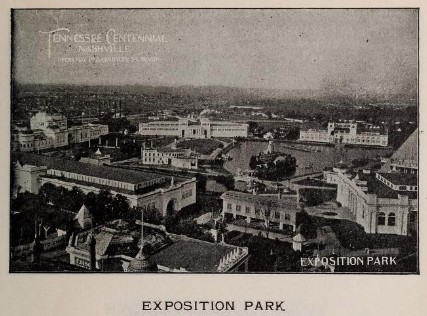
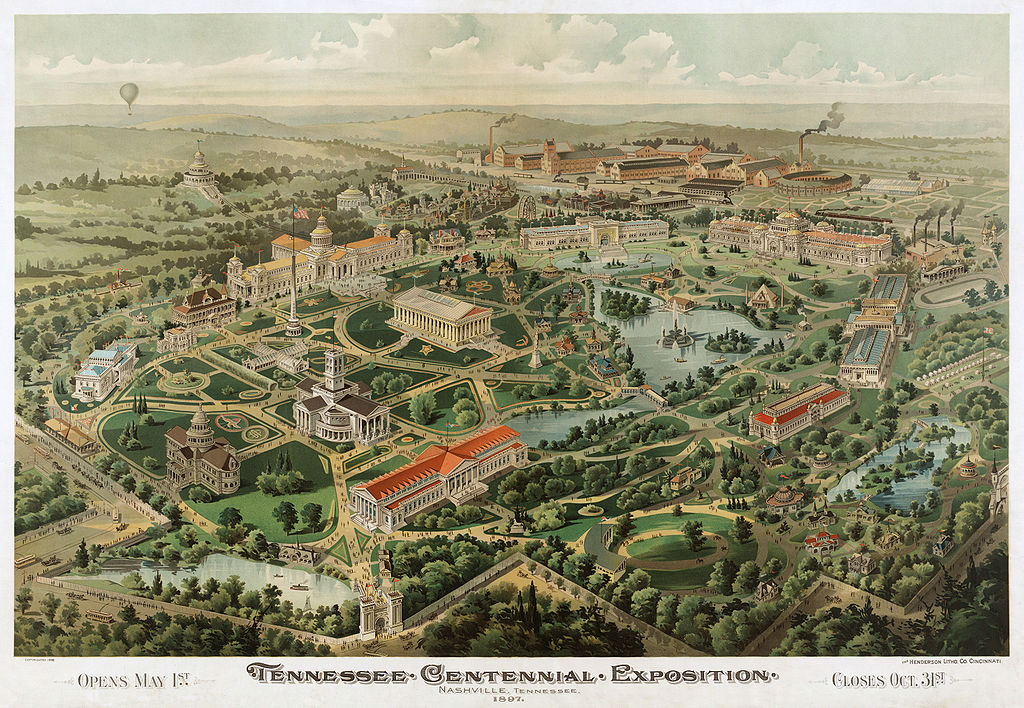
From May to October 1897, Nashville hosted a six-month celebration marking Tennessee’s 100th anniversary with a theatrical reimagining of identity, power, and progress.
Through grand architecture and curated exhibits, cities across Tennessee staked their claims to cultural legacy. Visitors explored 100+ buildings—from a full-scale Parthenon to a replica of Egypt’s Great Pyramid. Nearly 1.8 million people attended.
But beneath the plaster facades and patriotic fanfare, deeper stories unfolded—ones of symbolism, spectacle, and subtle resistance.
Getting There
Location: Nashville, Tennessee (Centennial Park specifically)
Transport: Fly into Nashville International Airport (BNA)
Car rental and public transportation are readily available. Ride Share from the airport is very convenient.
Nashville’s Parthenon: Democracy in Plaster
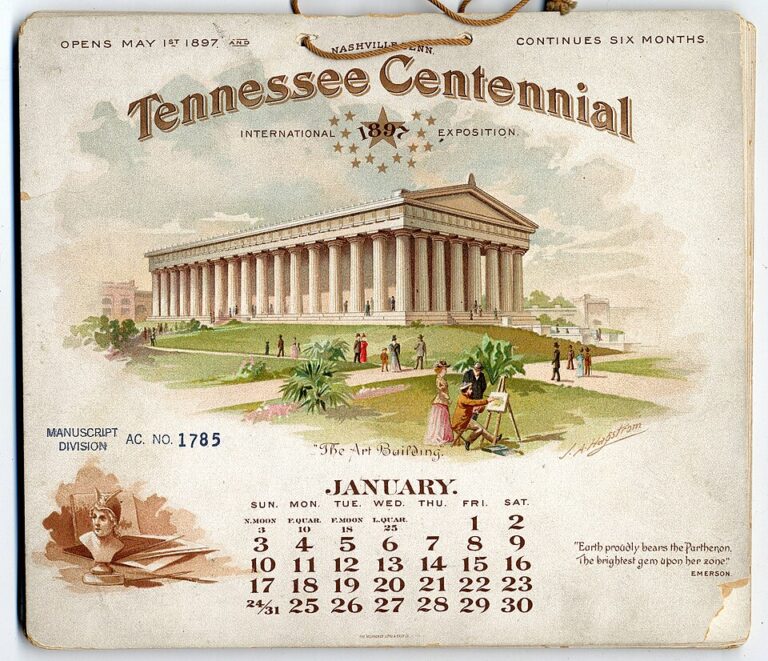
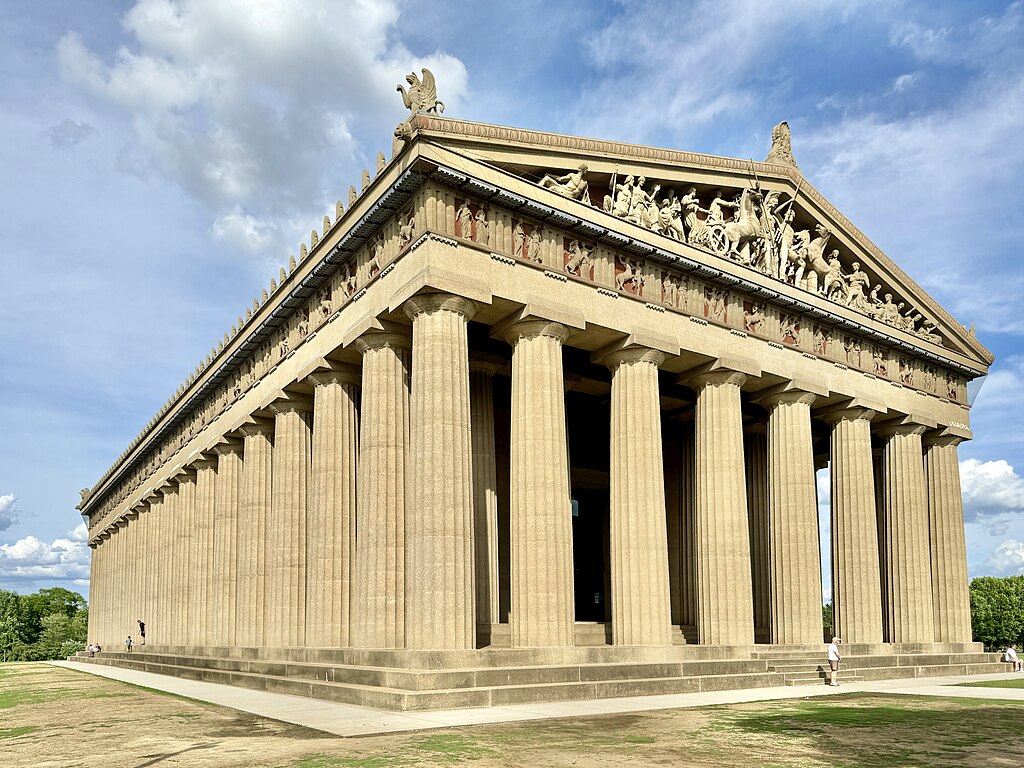
At the heart of the exposition in Centennial Park stood a full-scale replica of the Parthenon, a bold declaration that Nashville was the “Athens of the South.”
This architectural marvel wasn’t just a nod to classical beauty—it was a strategic branding move.
By aligning itself with ancient Greece, Nashville positioned itself as a beacon of education, civic virtue, and cultural refinement.
1897 Calendar featuring the Parthenon replica. CC SA 4.0
The Parthenon housed fine art exhibits and served as a centerpiece for intellectual pride. In addition to its symbolic role, it also reflected a broader trend in American cities: using classical architecture to legitimize modern ambitions. In this way, the Centennial became a stage where myth and modernity danced in tandem.
As with most Exposition Fairs at the time, buildings were not made to be permanent and many were destroyed once the fair closed. The Parthenon is the sole surviving structure from the 1897 event.
Today, that legacy continues as the Parthenon serves as a vibrant art museum and cultural centerpiece in Centennial Park, just west of downtown Nashville. It’s the world’s only full-scale replica of the original Parthenon in Athens, and its modern purpose beautifully blends classical homage with contemporary creativity.
But the Parthenon wasn’t the only architectural marvel on display…
Memphis' Pyramid Pavilion: Echoes of Egypt
Many visitors may think of Elvis Presley when they hear the town of Memphis, but did you know it was named after the town in Egypt?
When Memphis, Tennessee was founded in 1819, the city’s location on the Mississippi River Delta reminded its founders of Memphis, Egypt, which sat at the head of the Nile River Delta.
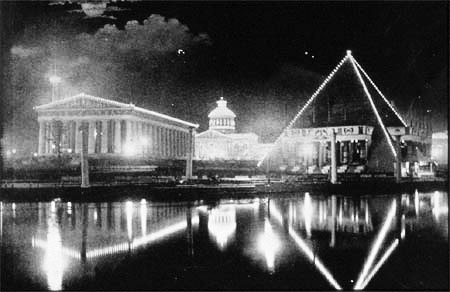
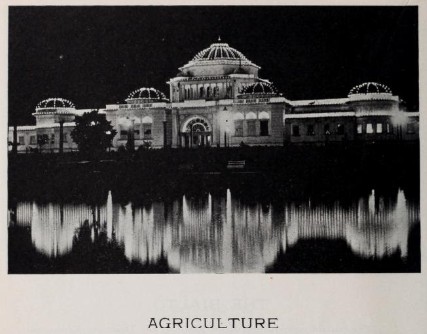
The Parthanon (Left) and Pyramid (right) were illuminated at the fair each night. Public domain image.
Building on this connection, Memphis leaned into its namesake with a striking Pyramid Pavilion, modeled after the Great Pyramid of Cheops. Located beside Lake Watauga and illuminated at night, the pyramid offered a dramatic counterpoint to the Parthenon—Egypt versus Greece, mystery versus reason.
Inside the pavilion, Memphis showcased their civic and commercial achievements. Nearby, the Egyptian-themed exhibits indulged in the era’s fascination with Orientalism, complete with belly dancers and exotic décor.
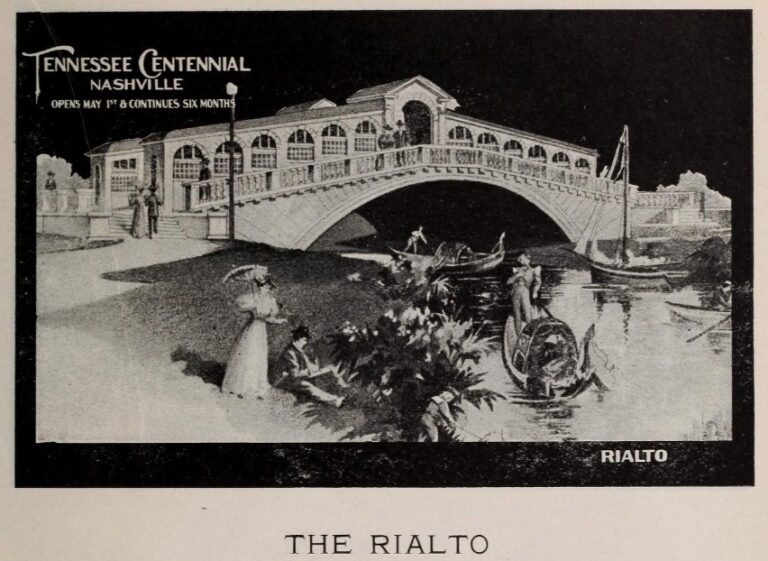
Together, these structures created a symbolic dialogue: Athens and Egypt, democracy and dynasty, intellect and mystique. Visitors floated past them in gondolas, drifting between civilizations reborn in plaster and light.
Though temporary, the Centennial Pyramid left a lasting impression. Decades later, this influence resurfaced with the construction of a modern Memphis Pyramidin 1991!
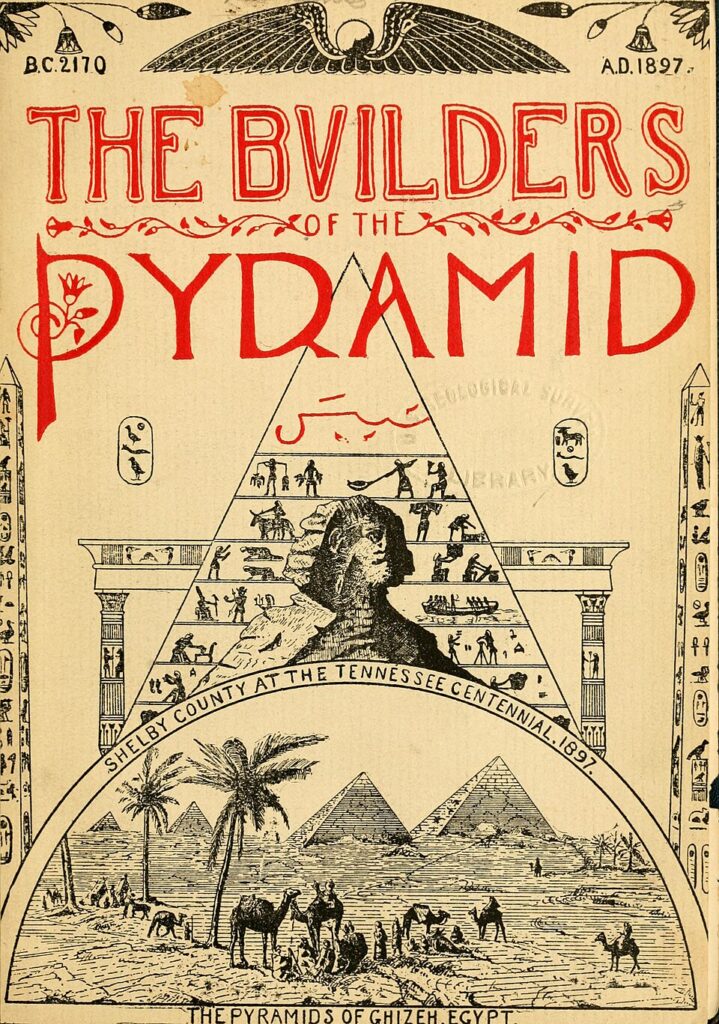
Pamphlet at the Fair describing the pyramids.
The Woman’s Building: Suffragists in the Shadows
Designing a Space for Women
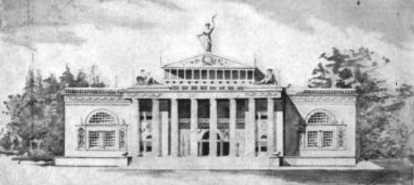
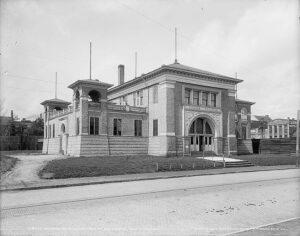
Women's Building at the 1897 Centennial
The Women’s Building was designed by Sarah Ward Conley, a Nashville artist and designer. She modeled the structure loosely on Andrew Jackson’s nearby homestead, The Hermitage.
Conley infused Green Revival elements as a nod to classical ideals and featured several beautiful features, like a Tiffany rose window.
Yet beyond it’s elegant facade, the Women’s Building carried a deeper mission – one rooted in advocacy and reform.
Art, Reform, and Quiet Resistance
Women raised funds after the Fair to relocate the Women's Building to Knoxville, TN but it sadly burned down in 1906. Public domain image.
Though the Centennial Exposition didn’t formally endorse women’s suffrage, the Woman’s Building was a space curated by female organizers with an agenda. The goal was to highlight women’s contributions to art, education, patents & inventions, literature, and civic life.
Each room was curated by a different group of women from counties across Tennessee. It also featured an observatory and restaurant which provided panoramic views of the fair.
Behind the scenes, activists distributed pamphlets, hosted informal gatherings, and engaged visitors in conversations about voting rights and social reform. These efforts mirrored tactics used at the 1893 Chicago World’s Fair, where suffragists created their own Congress to amplify their message.
The Woman’s Building was both a celebration and a constraint: a tribute to women’s achievements, yet confined to a separate sphere. Still, its existence signaled a shift. By occupying architectural space and cultural attention, women laid groundwork for future activism—including Tennessee’s pivotal role in ratifying the 19th Amendment in 1920.
Fate of the Women's Buliding
Like most buildings at the fair, the Women’s Building was to be demolished but women organizations in the region raised money to have it dismantled and rebuilt in nearby Knoxville where it was a hub of civic and cultural activities.
Sadly, it was destroyed by a fire in 1906. Fortunately, there is a marker at Centennial Park so you’ll know where the building once stood.
A stone monument in Centennial Park marking the site of the Woman's Building. Courtesy of the Library of Congress.
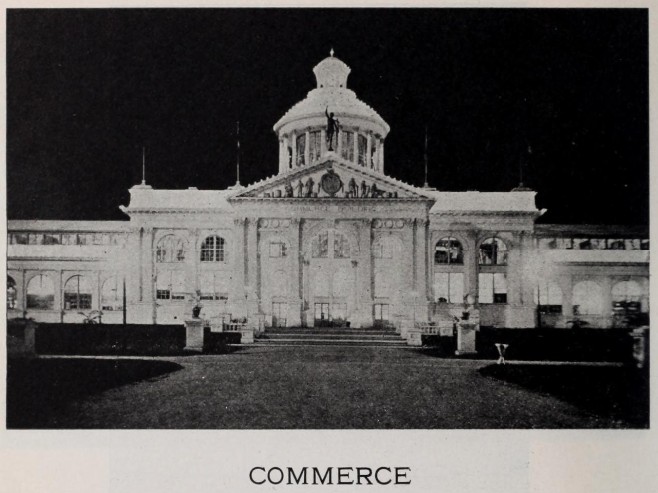
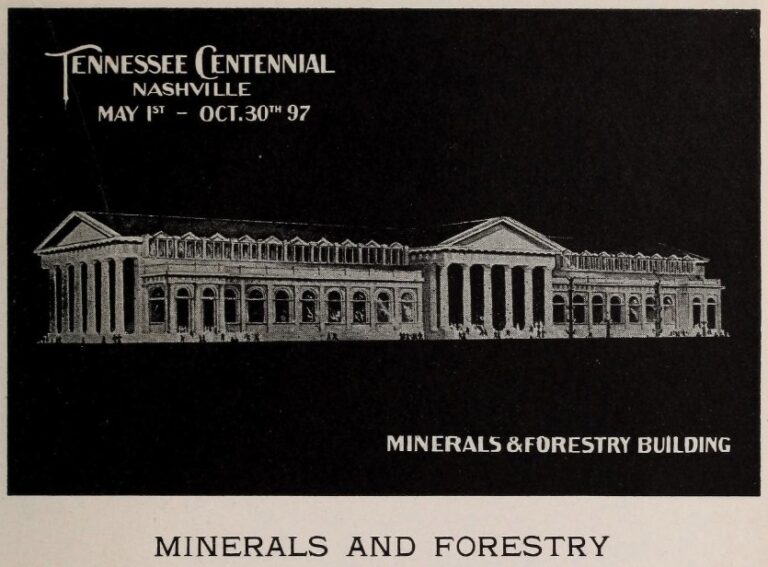
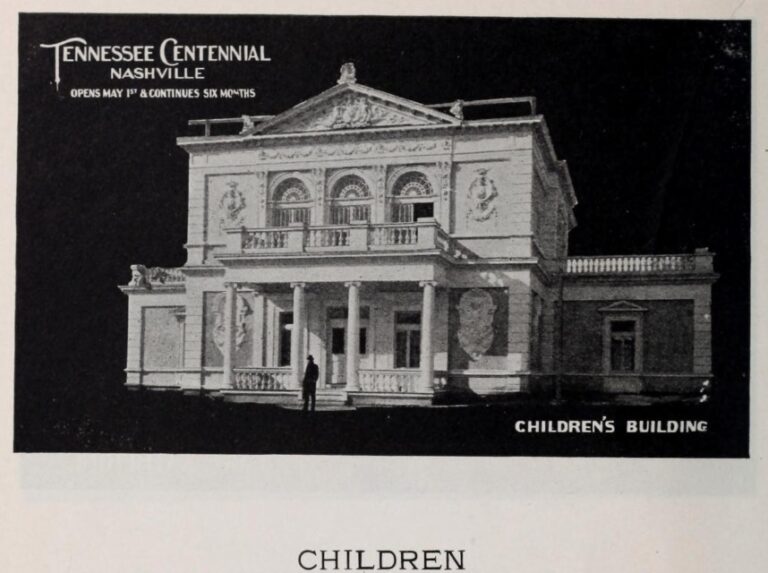
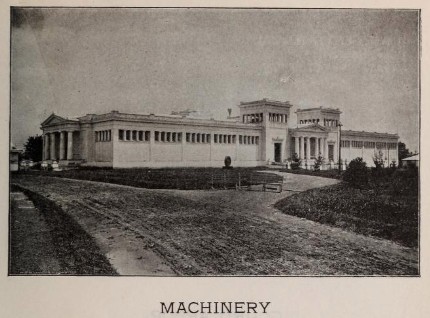
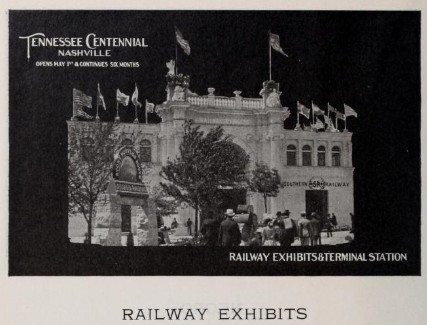
Images from the 1897 Tennessee Centennial program book.
Images courtesy of the Library of Congress Item No. 79315767
The Parthenon, Nashville. Photo courtesy of W LeMay, CC SA 2.0
Inspired to visit? Check out The Parthenon for more information.
Interested in learning more about this time period in history? Here’s a brief primer of the Modern period to put this post in context!
Want to visit similar sights? Check out this self-guided food tour of the 1893 Chicago World’s Fair.
Original historic designs now available in my Etsy shop: EpochApparelDesigns
Are you Team Egypt or Team Greece? Show your support with one of these humorous tees or opt for a more neutral position with a shirt professing your love of museums in general!
Additional colors for each available in the Etsy shop.